Uplighting vs dance floor lighting comes down to what you want guests to notice: the room around them or the area where they dance. Uplighting adds color to walls and architectural features. Dance floor lighting focuses on the dancing area, often using movement or changing effects. You can use either, both or neither, depending on the venue and the celebration you want.
Before comparing packages, describe the result you want. “Make the blank walls feel warmer during dinner” is a different request from “give open dancing a more energetic look.” That distinction helps your venue and entertainment team recommend a setup without treating every kind of lighting as interchangeable.
Uplighting vs dance floor lighting: two different purposes
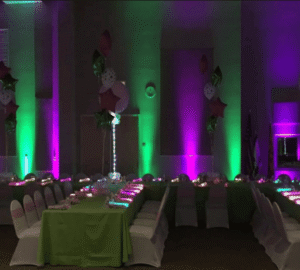
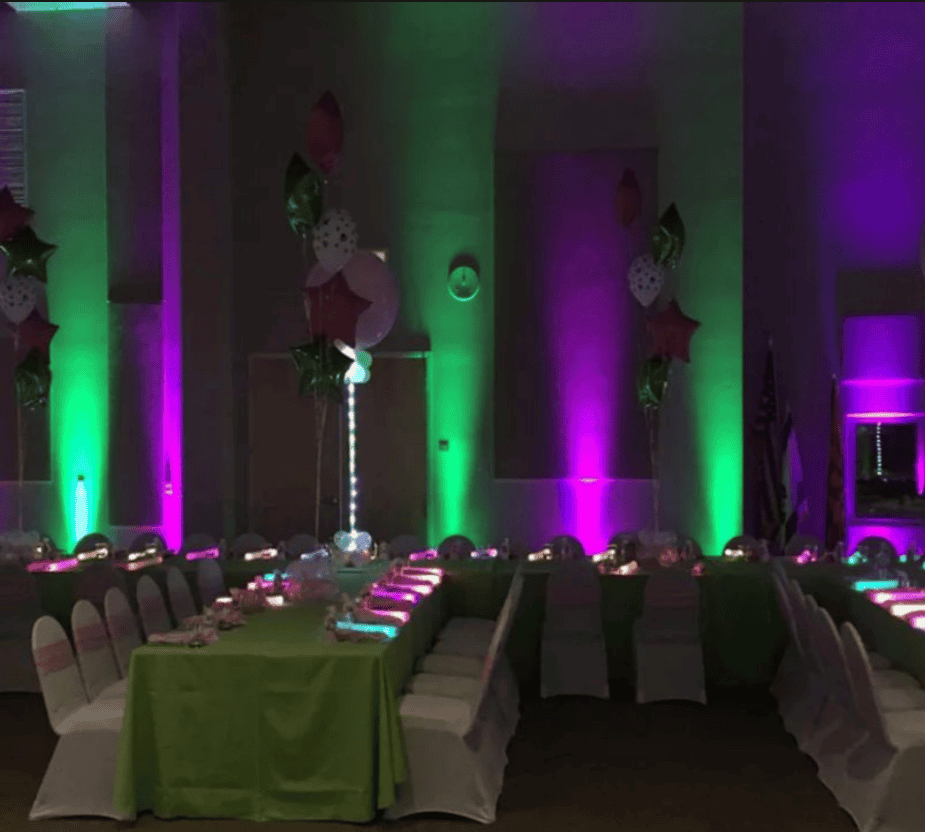
Uplighting is about the setting. Fixtures direct light upward onto a surface, creating a colored wash around the room. The main photo here, from RMJ’s uplighting gallery, shows green and purple light on columns beside banquet tables. It illustrates an architectural accent; it does not show what a separate dance-floor package would include.
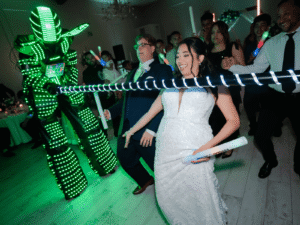
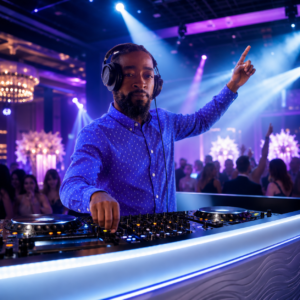
Dance floor lighting is about the activity. Depending on the equipment, it can illuminate the dancing area with color, patterns or moving effects. As ESounds Entertainment’s lighting overview explains, room enhancement and movement during dancing serve different purposes. Ask for an example of the actual proposed setup rather than assuming that the word “lighting” describes one standard package.
Start with what your venue already provides
Request photos of the room at the time of day your event will take place. A bright afternoon room and the same room after sunset can look very different. Ask which ceiling lights are dimmable, who controls them and whether existing decorative lighting stays on throughout the event.
Then mark your floor plan with the dining area, dance floor, DJ position, speech location and important photo backgrounds. This gives each supplier the same reference. If the venue already provides the atmosphere you want, additional room lighting may be unnecessary. If only one wall needs attention, explain that priority before requesting a full-room design.
Match the lighting plan to the timeline
Write down the look you want for guest arrival, dinner, speeches, the first dance and open dancing. For example, you might ask for a consistent room color during dinner and reserve moving effects for later. This is a planning preference to discuss, not a promise that every fixture or package supports live changes.
Assign responsibility for each change: the venue may control house lights while a separate provider handles event fixtures. Share that plan with your photographer and videographer so they can discuss lighting around faces, formal moments and important backgrounds. For toasts, pair the visual plan with our wedding speech microphone tips so the person speaking is easy to follow as well as hear.
Compare coverage and operation, not just fixture counts
A quote listing a number of lights does not tell you exactly how the finished room will look. Ask where the fixtures will be placed, which surfaces they will illuminate and what can be adjusted. Room shape, furniture placement and the selected effect all matter when discussing coverage.
RMJ’s event uplighting service describes wireless LED wall washes, customizable colors and professional placement. Use that service information as a starting point for a room-lighting conversation. Confirm any dance-floor effects separately; an uplighting booking does not by itself establish that those effects are included.
Questions to send with your lighting brief
Describe the room: “Here is the venue, floor plan and an evening photo. Which areas would you light, and why?” Include any furniture or décor that will block the proposed positions.
Describe the mood: “We want a calm dinner setting and a livelier dancing area later. Which changes can this setup make, and who operates them?” Mention preferences about flashing or moving effects before booking.
Confirm the practical details: “What access, setup time and power arrangements do you need? What must the venue approve? What is included in the written quote?” Have the suppliers agree on placement and clear walkways before the room is dressed.
Do you need both for a wedding or company party?
Not automatically. Choose uplighting when your priority is the room’s color and architectural detail. Discuss dance floor lighting when your priority is the visual feel of dancing. Consider both when you have two separate goals and the budget, space and venue arrangements support them.
A dinner-focused celebration may call for a different plan from a reception with a long dancing session. The useful decision is the one tied to your event’s actual schedule and room, with the equipment and responsibilities confirmed in writing.